Loading...
Serving Golden Gate, FL and surrounding areas. (239) 688-0022
Stained, crumbling, or algae-covered masonry is more than an eyesore. We repair, clean, and seal brick, block, and stone so your walls are protected before the next rainy season arrives.
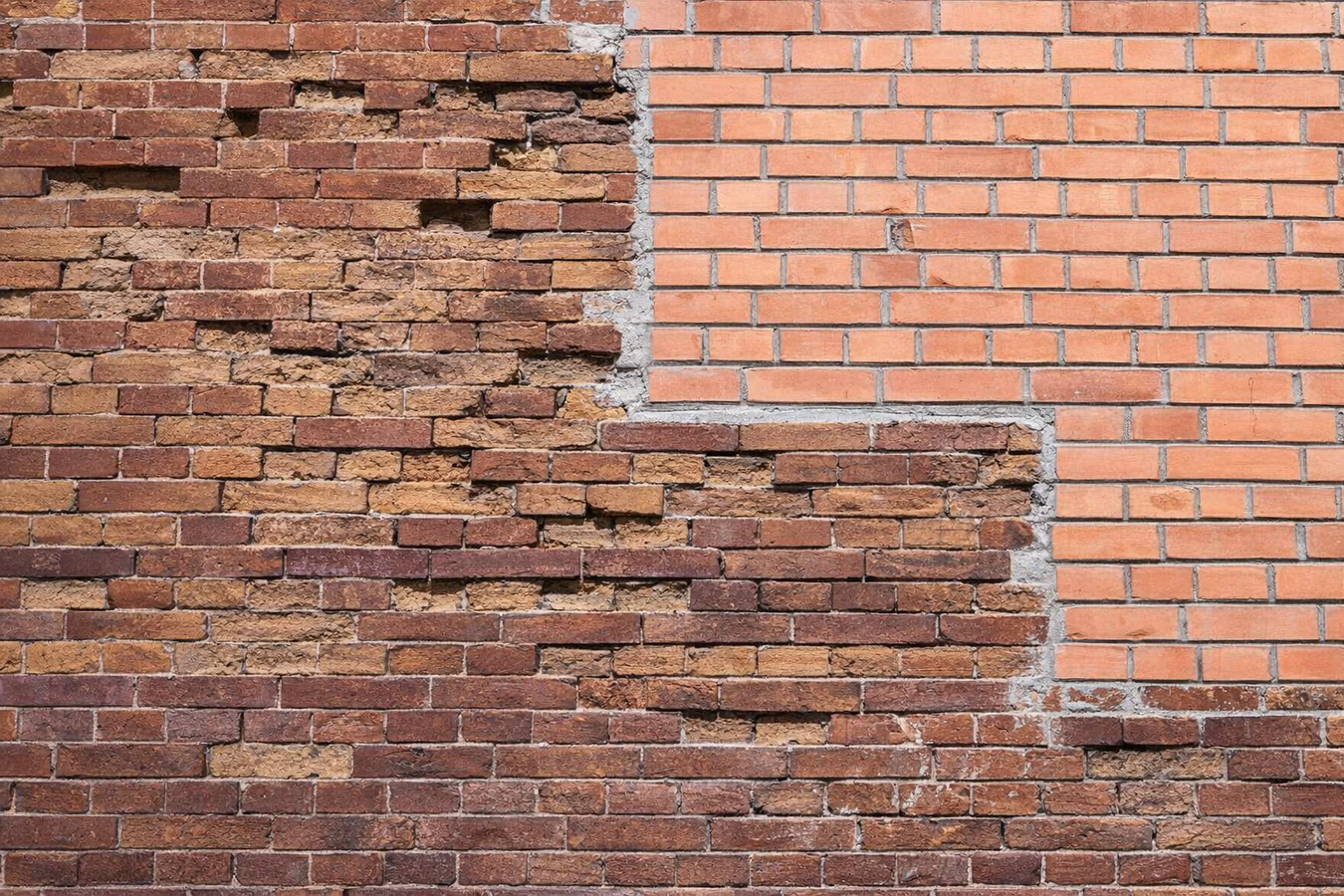
Masonry restoration in Golden Gate means repairing, cleaning, and sealing brick, block, or stone surfaces that have deteriorated from Florida's heat, humidity, and rain - most residential jobs wrap up in one to a few days depending on scope.
This is not a tear-down-and-rebuild project. The goal is to bring your existing masonry back to a sound, protected condition while keeping as much of the original material as possible. That usually means removing crumbling mortar, patching damaged faces, cleaning biological growth, and applying a breathable sealer suited to Southwest Florida's wet climate.
Golden Gate homeowners often call us after noticing white staining on a block fence, dark streaks on an exterior wall, or joints that crumble when touched. Those are all signs that moisture is already working its way in. If a retaining wall is part of the concern, our fireplace installation team also handles high-craft masonry builds, and our stone masonry work covers natural stone surfaces that need a more precise restoration approach.
If you can see gaps, soft sandy material, or missing chunks where the mortar used to be solid, water is already getting in. In Golden Gate's rainy season, open joints can allow significant moisture intrusion in a single afternoon storm - this is not something to put off.
That white, powdery residue on block or brick is called efflorescence. It means water has been moving through the masonry and depositing minerals on the surface as it evaporates. Southwest Florida's combination of humidity, rain, and salt air makes it especially common here.
Dark green, black, or brown streaking on masonry is almost always biological growth fed by Florida's heat and year-round humidity. These organisms hold moisture against the surface and speed up deterioration. Restoration cleans the surface and seals it to slow regrowth.
When the outer face of a brick or block starts to chip or pop off, the material has been weakened by repeated moisture cycles. In this climate, spalling tends to worsen quickly once it starts because dry spells are short and the next wet season is never far away.
Our masonry restoration work covers the full range of exterior masonry surfaces - block fences, exterior CBS walls, retaining walls, garden walls, chimneys, and decorative stonework. We start by removing deteriorated mortar, damaged units, and any biological staining before any new material goes on. Every repair is matched to your specific masonry type: the mortar mix, the hardness, the color, and the joint profile are all chosen to suit what is already there. Using a mortar that is too hard or too soft for the existing material is a common restoration mistake - it causes the surrounding brick or block to crack over time rather than protecting it.
After structural repairs, we clean the entire surface and apply a breathable sealer when that is part of the scope. The sealer allows trapped moisture to escape while blocking new water from entering - important in a climate where masonry never stays fully dry for long. For natural stonework, our stone masonry team handles restoration with the precision that natural stone requires. Surfaces with fireplace surrounds or interior masonry can be paired with our fireplace installation expertise for a complete result.
Best for block fences, chimney stacks, and exterior walls with failing or missing mortar joints.
Best for walls with efflorescence, algae, mold, or mineral staining that has built up over multiple wet seasons.
Best for brick or block faces that have begun to flake, chip, or break away and need material matched and filled.
Best as a final step on restored masonry to slow future moisture intrusion in Golden Gate's high-humidity environment.
Golden Gate sits in Collier County in Southwest Florida, where heat, humidity, and a wet season that runs June through September combine to break down masonry faster than almost any climate in the country. Mortar joints that might last 30 years in a dry climate can deteriorate in a fraction of that time here. Golden Gate is also extremely flat, which means water does not drain away from masonry walls quickly after heavy rain - standing water against a block fence or retaining wall after a summer storm is a direct driver of efflorescence, joint erosion, and eventually structural movement. The dry season window from October through May is the best time to restore and seal, giving repairs time to cure fully before the next rainy season.
Salt air moving inland from the Gulf of Mexico - Golden Gate is roughly 10 to 15 miles from the coast - deposits chlorides in mortar and block over time, which weakens binders and accelerates surface damage. This is why masonry here almost always needs a salt-neutralizing cleaning treatment before new mortar or sealer goes on. We serve Golden Gate and neighboring communities including Naples and East Naples, so we know the CBS construction styles, local soil conditions, and HOA approval processes that affect restoration projects throughout Collier County.
Call or submit the online form and describe what you are seeing: crumbling joints, staining, spalling, or cracks. We respond within one business day to gather details and schedule an on-site visit at a time that works for you.
We walk the surface, probe joints, and look for signs of water behind the masonry. What looks like a surface problem sometimes points to a deeper issue - we tell you honestly what we find before quoting anything. There is no pressure to commit on the spot.
The crew removes deteriorated mortar, damaged units, and biological growth before applying any new material. In Golden Gate's heat, crews typically work in the morning and pause during the hottest part of the afternoon to protect both workers and freshly applied mortar.
Once repairs have set, we clean the full surface and apply sealer if that is part of the scope. We walk the job with you before leaving - point out anything that looks off while the crew is still on site. Curing instructions are provided so you know when it is safe to wash or wet the surface.
Free on-site estimate. We respond within 1 business day. No pressure to commit.
(239) 688-0022We assess the hardness, color, and texture of your existing mortar before choosing a replacement mix. Mortar that is too hard traps moisture and causes the surrounding brick or block to crack over time - we do not skip this step, and we will show you a test patch before proceeding if color match matters to you.
Golden Gate sits inland from the Gulf, but salt-laden air still reaches the area. We include salt-neutralizing cleaning treatments before new mortar or sealer goes on, which is standard practice for Southwest Florida masonry work and prevents the white staining from returning quickly.
Florida requires masonry and restoration contractors to hold a state-issued license. You can verify any contractor's license status on the Florida DBPR site before you sign anything. We provide our license number without hesitation - a contractor who hesitates is a red flag.
Some surfaces do not need full restoration, and we will tell you that. If repointing two sections is the right call rather than a full-wall job, that is what we recommend. Our referral business depends on homeowners who trust us to give an honest assessment, not oversell a scope.
The Mason Contractors Association of America sets the professional standards we work to on every job. Combined with Florida state licensing you can verify at myfloridalicense.com, those credentials give you an objective way to compare contractors beyond price alone.
Custom masonry fireplace builds from the ground up, including firebox, smoke chamber, and chimney, for Golden Gate homes wanting a permanent focal point.
Learn MoreNatural stone work for walls, columns, and decorative features, with jointing and finishing suited to Southwest Florida's outdoor climate.
Learn MoreGolden Gate's summer rains are hard on deteriorated masonry - call now to lock in your dry-season repair date and protect your walls before the next storm season.